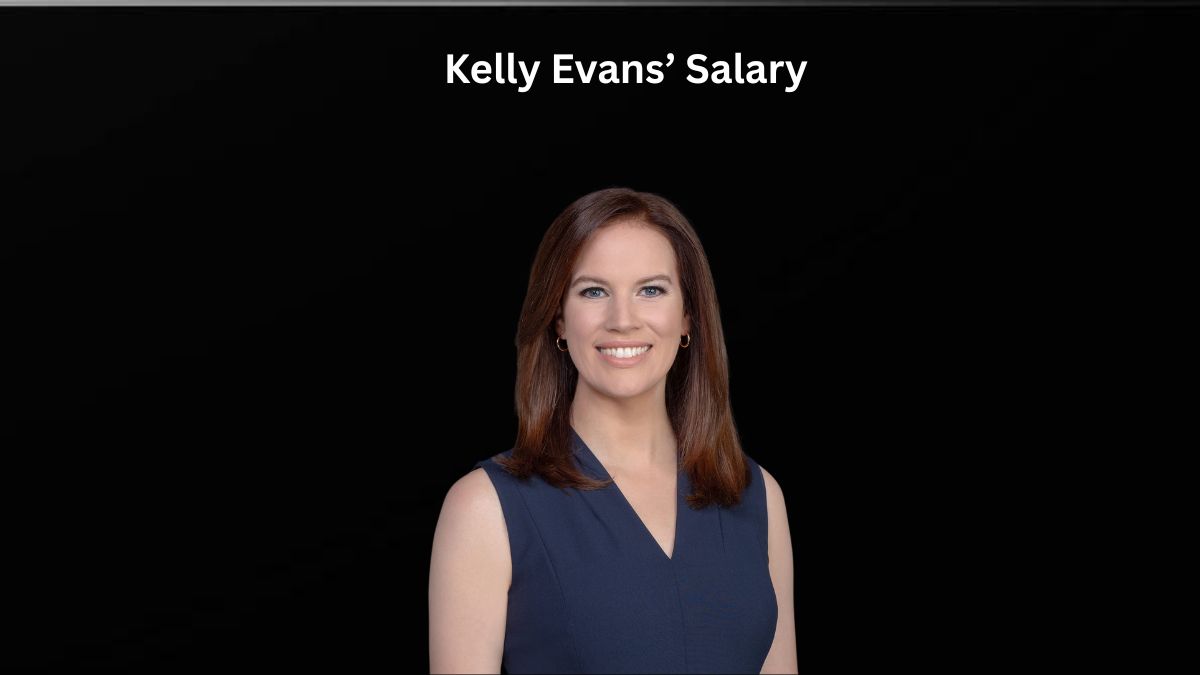
If you have ever spent a weekday afternoon tuned into Kelly Evans’ Salary CNBC, chances are you have seen Kelly Evans holding court. As the sharp-witted host of The Exchange and co-anchor of Power Lunch, she has become an absolute fixture in financial broadcast television. Fans and industry insiders alike admire her rare ability to take incredibly messy, high-stakes market news and break it down into something approachable, engaging, and clear. But whenever a news personality becomes a household name on Wall Street, a natural curiosity follows: how much does someone at the top of the financial reporting game actually make?
The buzz around the keyword “kelly evans salary” isn’t just about simple curiosity; it reflects a broader fascination with the lucrative economics of modern cable news. When people search for details on her compensation, they are trying to peek behind the curtain of network television to see how financial journalism is rewarded at the highest levels. While private contracts are rarely broadcast on air, industry estimates generally place Kelly Evans’ annual salary somewhere between $500,000 and $3 million.
Unpacking that figure requires looking at more than just a single baseline check. To understand how her earning power developed, you have to look at her career trajectory, the competitive dynamics of major cable networks, and the value she brings to a premier brand like CNBC. From her early days breaking stories in print to leading prime afternoon blocks on cable TV, her journey provides a fascinating blueprint of how specialized expertise translates into serious financial compensation in the broadcasting world.
The Journey to the Anchor Desk: How Talent Built Her Financial Value
To understand why Kelly Evans commands a top-tier media salary today, it helps to rewind to where her professional narrative began. Long before she was a household face on television, Evans built her foundational credibility in print journalism. She graduated magna cum laude from Washington & Lee University, a background that set the stage for her quick rise in financial media. She landed at The Wall Street Journal, one of the most rigorous training grounds for any economic reporter.
During her tenure at the Journal, Evans was not just writing run-of-the-mill market updates. She penned influential columns like “Ahead of the Tape” and contributed heavily to “Heard on the Street,” two features scrutinized daily by institutional investors, traders, and corporate executives. She also pioneered early digital video initiatives for the publication by hosting WSJ.com’s “News Hub”. This critical cross-platform experience proved that she possessed not only a deep grasp of macroeconomic policy and market mechanics, but also an easy, natural presence on camera that resonated with viewers.
When CNBC recruited her in 2012, they were not just hiring a news reader; they were investing in a battle-tested financial reporter who could think on her feet during live, volatile market moves. Her initial roles across various daytime shows led to anchor spots on flagship broadcasts like Closing Bell and Squawk on the Street. Network television operates on a basic principle: credibility drives viewership, and viewership drives ad revenue. By establishing herself as an authority early on, Evans gave CNBC every reason to offer competitive compensation packages to keep her talent locked in for the long haul.
Breaking Down the Numbers: Salary Estimates and Compensation Structure
When investigating any major TV personality’s earnings, it is important to remember that network news anchors rarely work under standard hourly or fixed corporate structures. In the broadcast world, salary figures reported by media outlets represent a combination of base pay, contract bonuses, performance incentives, and long-term retention clauses. Estimates regarding Kelly Evans’ annual earnings vary across industry reports, with figures typically spanning from $500,000 on the conservative end to upwards of $3 million annually for veteran anchor contracts at premier business channels.
Why is there a range in these figures? Broadcast contracts are multi-year agreements that scale up as an anchor’s responsibilities expand. Moving from a general correspondent or co-host role into anchoring dedicated solo hours like The Exchange fundamentally shifts an employee’s leverage during contract renewals. When an anchor consistently holds down critical daytime hours where financial traders and active individual investors tune in live, their market rate increases significantly.
Beyond the baseline pay provided by the network, top-tier financial journalists often have additional income streams that contribute to their total financial portfolio. These can include public speaking engagements at corporate events, moderation fees for major economic summits, and industry panels. While journalists at major news organizations abide by strict ethics policies regarding endorsements, the secondary opportunities stemming from high-visibility television roles add noticeable depth to an anchor’s overall net worth, which financial tracking sites estimate to be around $3 million to $6 million.
CNBC’s Business Model: Why Top Anchors Earn Premium Pay
To put Kelly Evans’ compensation into proper perspective, you have to look at the unique economics of CNBC as a network. Unlike general network news broadcasts that air once a day in the evening, business channels rely on live, continuous coverage while markets are open. The audience tuning in during these hours is uniquely valuable to advertisers. It consists of high-net-worth individual investors, wealth managers, corporate executives, and institutional traders—a demographic that commands premium advertising rates.
Networks like CNBC are willing to pay top dollar for anchors who can maintain the network’s reputation for financial accuracy while keeping broadcasts engaging over several continuous hours. An anchor on a business network needs to seamlessly pivot from breaking Fed rate decisions to live CEO interviews, all while breaking down complex earnings reports in real time. One major slip-up or misinterpretation of financial data can damage a network’s credibility instantly.
Because the stakes are so high during market hours, television networks protect their prime assets carefully. High anchor salaries serve a dual purpose: they reward proven live-broadcasting talent and act as a defensive measure to keep key personalities from being poached by competing networks like Bloomberg TV or Fox Business. When CNBC structures compensation for anchor personalities like Evans, they are pricing in her track record, her ability to retain viewers during critical market shifts, and her role as a cornerstone of their daytime lineup.
Comparing Anchor Pay: Where Evans Fits in the Media Landscape
In the broader universe of television journalism, media compensation exists across a vast spectrum. At the absolute top tier of morning shows and evening cable news, prime-time anchors can fetch salaries in the double-digit millions. However, in specialized business news, salary structures reflect a different kind of audience scale—one defined less by sheer audience volume and more by high demographic value.
Within CNBC itself, compensation generally falls into distinct tiers. Legendary veteran figures who have spent decades with the network or anchor flagship morning programs like Squawk Box sit at the higher end of the pay scale. Mid-career anchors who hold down crucial afternoon market coverage—a group where Kelly Evans firmly belongs—command salaries that reflect their status as the network’s core day-to-day performers.
Comparing Evans’ estimated pay with industry benchmarks reveals that her earnings are right in line with industry standards for mid-career cable anchors handling primary daytime programming. It places her among the well-compensated professionals in financial media, reflecting both her decade-plus tenure with NBCUniversal and the consistent ratings her show blocks deliver.
The Real Value of Kelly Evans: Talent, Longevity, and Career Growth
Ultimately, focusing strictly on a salary figure misses the bigger picture of what makes Kelly Evans such a durable presence in financial broadcast media. In an industry known for rapid turnover, changing media formats, and fluctuating network strategies, Evans has maintained a continuous, high-visibility profile on CNBC for over a decade. That level of career longevity does not happen by accident.
Her value to the network stems from a genuine ability to make complex financial concepts accessible without oversimplifying them for sophisticated viewers. Whether she is probing central bank policy, discussing housing market trends, or interviewing Wall Street strategists, her reporting is grounded in the economic fundamentals she mastered early in her reporting career.
As the landscape of financial news continues to evolve across cable, digital streaming, and podcasting, anchors who possess both deep journalistic authority and multi-platform versatility will continue to command top-tier compensation. The interest in Kelly Evans’ salary is simply a reflection of her status in that landscape: a professional who transformed a talent for market reporting into one of the most visible and successful careers in modern business journalis